Every property and facility manager has a vendor list. The question is whether it still works on the worst day of the year: the hail storm, the hard freeze, the first 110-degree week, the monsoon microburst. A vetted vendor list is one where every name has current paperwork, a confirmed response time and a backup behind it. This guide walks through building one across Texas and Arizona, region by region, whether you manage one community or a portfolio that spans both states.
Why a vetted list beats a phone search on the worst day
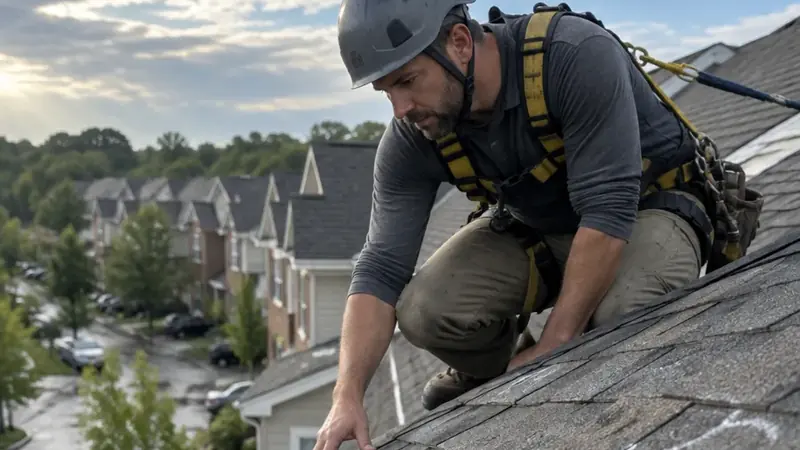
When a regional event hits, every property in the area needs the same trades at the same time. The vendors who answer first are the ones who already know you. A manager searching for a new roofer the morning after hail is competing with every other manager in the region, and has no time to check insurance or licensing before signing.
A vetted list flips that. The checking happens on a calm Tuesday, not during the emergency. It also protects you with owners and boards: when someone asks why you picked a vendor, you can show the paperwork you collected before you called.
Step 1: List your trades and your regions
Start with the trades your properties actually call. For most multifamily, HOA and commercial portfolios that means roofing, water and storm restoration, HVAC, commercial cleaning or janitorial, landscaping, plumbing and electrical. Then map where your properties sit. Vendors work by drive time, so a Texas or Arizona portfolio needs coverage by region, not just the biggest metro.
Texas regions
- Metroplex and North Texas
- Gulf Coast and Southeast Texas
- Capital and Central Texas
- Alamo region and South Texas
- Rio Grande Valley and the border
- West Texas, High Plains and Upper Rio Grande
- Upper East and Northwest Texas
Arizona regions
- Central Arizona, including the Phoenix area
- Southern Arizona, including the Tucson area
- Northern Arizona
- Western Arizona and the Colorado River communities
The Texas Comptroller groups the state into 12 economic regions, which is a useful starting grid. If a vendor says they cover "all of Texas", ask which regions they can reach the same day.
Step 2: Collect the same packet from every vendor
Use one standard packet for every trade. If it is the same every time, gaps stand out.
- Certificate of insurance showing general liability, with your property or association named as additional insured if your management agreement requires it.
- Signed W-9. The IRS raised the Form 1099-NEC reporting threshold to $2,000 for payments made in 2026, and if a vendor does not provide a taxpayer ID, the payer generally has to backup-withhold 24%.
- License number for any licensed trade, checked at the state source (Step 3).
- Workers' comp certificate or non-subscriber notice. In Texas, most private employers are not required to carry workers' comp, per the Texas Department of Insurance, so ask directly.
- Emergency contact that a real person answers after hours.
- Written response time for a normal day and for a regional event.
- Service regions and job sizes the vendor will actually take.
Step 3: Verify licenses at the source
A license number on a quote is a claim. The state database is the proof. Both states make this free to check.
Texas HVAC
Contractors who install, repair or maintain air conditioning, refrigeration or heating systems must hold a TDLR license.
Texas electrical
Electricians and electrical contractors are licensed by TDLR.
Texas plumbing
Plumbers are licensed by the Texas State Board of Plumbing Examiners.
Arizona contractors
The Arizona Registrar of Contractors generally requires a license when labor and materials exceed $1,000 or a permit is required.
The Arizona Registrar of Contractors also recommends calling the phone number listed on the license to confirm you are talking to an authorized representative, because it has investigated unlicensed businesses using a licensed contractor's number. That is a good habit in either state. For mold work in Texas, see the TDLR rules covered in our restoration vendor checklist.
Step 4: Plan for the season in each region
Texas and Arizona have different peak seasons, and each one drives a different trade. Build your backups before the season, not during it.
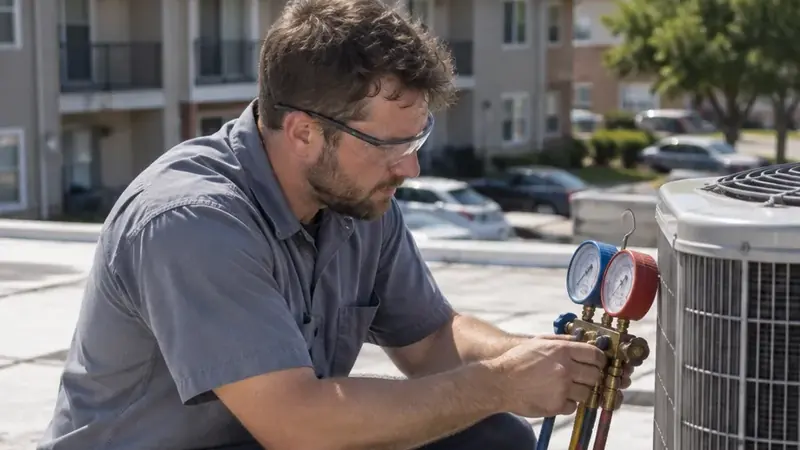
In practice that means: roofing and restoration backups confirmed before spring hail in North and Central Texas and before hurricane season on the coast; HVAC maintenance and a backup HVAC vendor in place before Arizona's heat (our HVAC checklist covers this); and restoration and plumbing backups lined up before a hard freeze, which Texas saw statewide in February 2021.
Step 5: Name a primary and a backup in every trade
A list with one name per trade is not a list; it is a single point of failure. For each trade and region, name a primary and at least one backup whose packet is already complete. The backup should know they are the backup, so they pick up when you call. For commercial roofing, our guide on vetting a roofer after Texas hail or hurricane season walks through what to check.
A simple vendor-list workflow
- MapTrades by property, properties by region.
- CollectOne packet per vendor: COI, W-9, license, comp, contacts.
- VerifyCheck every license at the state source.
- AssignPrimary and backup for every trade and region.
- TrackExpiry dates on insurance and licenses, reviewed quarterly.
Step 6: Keep it current
Most vendor lists fail quietly. Insurance lapses, a license expires, the one person who answered after hours leaves. Put every expiry date on a calendar, ask for updated certificates before they lapse, and pause any vendor whose paperwork is out of date until it is fixed. When a vendor misses a response commitment, write it down. A short note now saves an argument with an owner later.
Review the full list at least once a year and before each peak season. New properties, new regions and new managers on your team are all reasons to re-check coverage.
Where OnRoster fits
OnRoster is a vendor network that does this work for managers, free. We collect each contractor's certificate of insurance, license where the trade has one, W-9 and response commitment, track expiry dates, and give you one number to text when you need someone. You decide who you hire, and any contract is between you and the contractor. OnRoster covers Texas and Arizona statewide by region and is open to managers nationwide.
You can request contractors for a specific job, or set up a free roster for your properties. Contractors who want to be on managers' lists can join the network by trade: roofing, restoration, commercial cleaning and commercial HVAC.
Questions people ask
What should be in a vendor packet?
A certificate of insurance (with your property named as additional insured if your agreement requires it), a signed W-9, the license number for licensed trades, workers' comp status, an after-hours contact and a written response time.
How do I check a contractor's license in Texas?
Look the license up at the issuing agency: TDLR for HVAC and electrical work, and the Texas State Board of Plumbing Examiners for plumbers.
When does a contractor need a license in Arizona?
The Arizona Registrar of Contractors generally requires a license when labor and materials exceed $1,000 or a permit is required. Check the license at roc.az.gov and call the number listed on it.
How many vendors should I have per trade?
At least a primary and one backup per trade in each region where you manage properties, both with complete paperwork.
How often should I update my vendor list?
Track insurance and license expiry dates continuously, review the whole list at least once a year, and re-check coverage before each peak season.
Does OnRoster charge property managers?
No. OnRoster is free for managers. Contractors pay to be on the network, and managers decide who they hire.
Sources
- Texas Comptroller: Regional Economic Analysis (12 economic regions)
- IRS: Am I required to file a Form 1099?
- IRS: Instructions for the Requester of Form W-9
- Texas Department of Insurance: Workers' compensation coverage
- TDLR: Air Conditioning and Refrigeration Contractors
- TDLR: Electricians
- Texas State Board of Plumbing Examiners
- Arizona Registrar of Contractors: License classifications
- Arizona Registrar of Contractors: Contracting in Arizona, what you need to know
- National Hurricane Center: Tropical cyclone climatology
- National Weather Service Tucson: Monsoon safety
- NWS Fort Worth: February 2021 winter event
General information, not legal, insurance or tax advice. Rules change; check the source for your property. OnRoster is a vendor network run by Inertia Management. We are not a contractor and do not perform work.