Why storm season changes the hiring math in Texas
Texas gets more than one kind of roof weather, and each metro sees a different mix. Knowing which one you are dealing with tells you what kind of roofer you need and how fast.
Hail in North and Central Texas
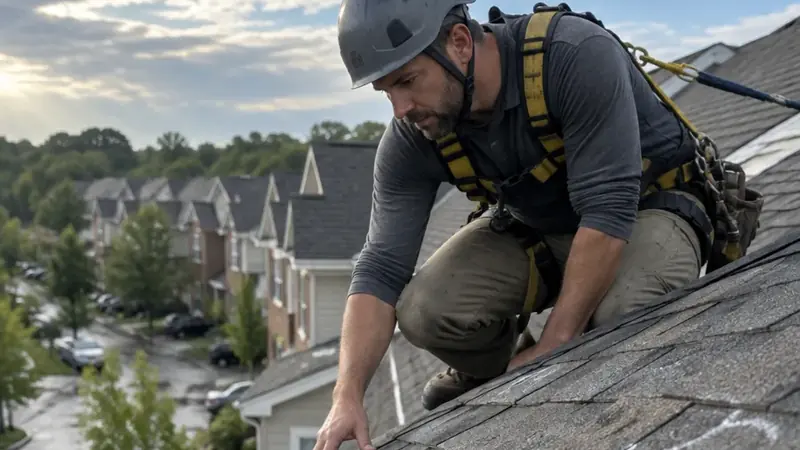
Dallas–Fort Worth, Austin and San Antonio all sit in hail country. Large hail can fall in any month, but spring is when most managers in the region start getting roof calls. The hailstorm of April 12, 2016 dropped stones up to about 4.5 inches across parts of north San Antonio, according to the National Weather Service Austin/San Antonio office. Hail damage on a low-slope roof is often hard to see from the ground, and a small puncture in a membrane can leak for months before a ceiling stain shows up.
Hurricanes and flooding on the Gulf Coast
In Houston and the coastal suburbs, the risk is wind-driven rain, flashing and edge-metal failures, and flooding. The Atlantic hurricane season runs June 1 to November 30, per the National Hurricane Center. Hurricane Harvey in 2017 is the reminder most Houston managers carry: the National Weather Service Houston/Galveston office documents catastrophic flooding across the metro.
Freeze across the state
The February 2021 winter storm kept Dallas–Fort Worth at or below freezing for days, per the National Weather Service Fort Worth office. Ice and snow load, frozen roof drains and burst pipes in attic spaces all end up as roof and ceiling calls.
In every case, demand for roofers jumps on the same day for every property in the area. That is when vetting gets skipped, and when you most need it done in advance.
Texas does not license roofers. Check these instead.
There is no state roofing contractor license in Texas. The Roofing Contractors Association of Texas offers a voluntary license and explains that the state does not license roofers. That does not mean anyone is fine. It means you check other things.
City registration and permits
Many Texas cities require contractors to register and pull permits for roof replacement. The City of Dallas, for example, says a re-roof permit is required for full roof replacement and larger repairs, and the contractor must be registered with the City, per its storm damage repair guidance. Rules differ by city, so ask your roofer which permit your job needs and who pulls it.
Insurance on file before the work
Ask for a certificate of insurance showing general liability, with your property or association added as additional insured if your management agreement requires it. Texas does not require most private employers to carry workers' compensation, according to the Texas Department of Insurance. Ask whether the roofer carries it. If they are a non-subscriber, ask how injuries on your property would be handled and check with your own insurance carrier before work starts.
A local address and similar work
Ask for a physical business address in Texas and for references from properties like yours: a garden-style apartment community, a retail center, a mid-rise office. Commercial low-slope systems such as TPO, modified bitumen and built-up roofing are different work from shingles on a house.
Manufacturer standing
If your roof carries a manufacturer warranty, repairs by an uncertified installer can put it at risk. Ask the roofer whether they are certified by the manufacturer of your system, and ask the manufacturer to confirm.
What Texas law says about insurance claims
Two rules come up on almost every storm job. This is general information, not legal advice.
- The deductible is yours to pay. Texas law makes it an offense for a seller to waive, absorb or rebate an insured's deductible on work paid from a property insurance claim, and larger contracts must carry a written deductible notice, under Texas Business and Commerce Code §27.02. A roofer who offers to cover your deductible is offering to break the law. The Texas Department of Insurance has a plain summary.
- A roofer is not your adjuster. A contractor can document damage and meet your insurance adjuster on the roof, but Texas law does not allow a contractor to act as a public adjuster on a claim for a property they are repairing. TDI's guide above covers this as well.
A short checklist before you sign
- Certificate of insurance on file, with additional insured status if your agreement requires it.
- City registration confirmed where your city requires it, and a clear answer on who pulls the permit.
- A written scope: areas of the roof, system type, what is repair and what is replacement.
- Photo documentation of damage, with locations marked on a roof plan.
- The deductible notice in the contract when the work is paid from insurance.
- A W-9 and a named contact who answers during a storm week.
- A stated response time for leaks, in writing.
Commercial and residential roofers are different hires
A roofer who does great work on single-family homes may not be the right call for a 40,000 square foot flat roof, and the reverse is also true. If you manage both, keep one of each on file. On OnRoster, roofing has two separate openings in each market for this reason, one commercial and one residential.
Do the vetting before the storm
The best time to check a roofer's paperwork is a quiet week in winter, not the morning after a hailstorm. Put a primary and a backup on file, with insurance and registration checked, and you will have someone to call when every other manager in your area is calling too.
OnRoster is live in Dallas–Fort Worth, and we are building the vendor roster in Houston, San Antonio and Austin. Managers can set up a free roster in any of them. Roofers in North Texas can check the roofing trade page.
Questions managers ask
Does Texas require a roofing license?
No. Texas does not have a state roofing contractor license. The Roofing Contractors Association of Texas offers a voluntary license. Many cities require contractor registration and permits, so check with the city where the property is.
Can a roofer pay or waive my insurance deductible in Texas?
No. Texas Business and Commerce Code §27.02 makes it an offense for a seller to waive, absorb or rebate an insured's deductible on work paid from a property insurance claim.
Can my roofer negotiate with my insurance company for me?
A roofer can document damage and meet your adjuster, but Texas law does not allow a contractor to act as a public adjuster on a claim for property they are repairing. The Texas Department of Insurance explains this in its roofing and insurance guide.
When should I have roofs inspected after hail?
As soon as it is safe and a qualified roofer can get on the roof. Damage on low-slope roofs is often not visible from the ground, so ask for photos with locations marked on a roof plan.
Is OnRoster a roofing contractor?
No. OnRoster is a vendor desk run by Inertia Management. We keep contractors with paperwork on file for managers. We do not perform work, and you decide who you hire.
Sources
- NWS Austin/San Antonio: April 12, 2016 hailstorm
- National Hurricane Center: tropical cyclone climatology
- NWS Houston/Galveston: Hurricane Harvey
- NWS Fort Worth: February 2021 winter event
- Roofing Contractors Association of Texas: consumer information
- City of Dallas: storm damage repair information
- Texas Department of Insurance: workers' compensation coverage
- Texas Business and Commerce Code §27.02
- Texas Department of Insurance: roofing and insurance, know the law
General information, not legal, insurance or tax advice. Rules change; check the source and your own advisers for your property. OnRoster is a vendor desk run by Inertia Management. We are not a contractor and do not perform work.