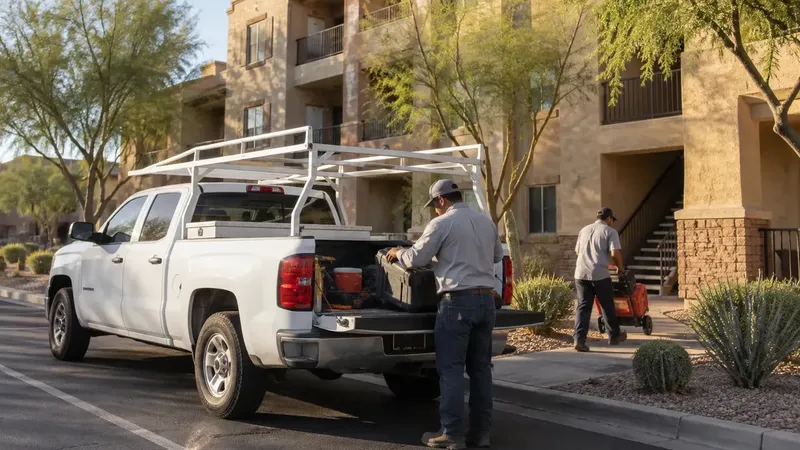
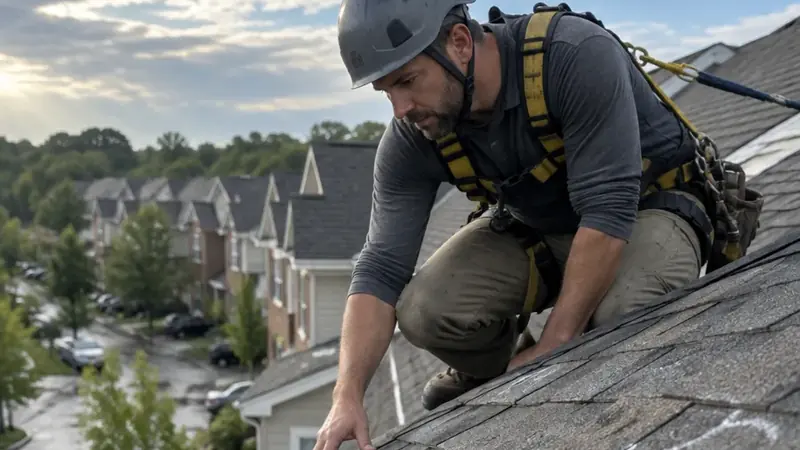
If you run a roofing company in North Texas, you already know the pattern. A storm rolls through, phones light up, and trucks from out of the region show up in parking lots within days. Property managers, facility managers and HOA managers mostly do not hire from that crowd. They call the roofers already on their approved vendor list, the short list of companies whose paperwork is on file and who have proven they show up. This guide is about getting on that list in the Metroplex and the rest of North Texas, and staying on it.
Why the approved vendor list decides who gets the call
Hail is a regular part of doing business here. Texas led the country in major hail events in 2025 by a wide margin, according to Storm Prediction Center data compiled by the Insurance Information Institute.
Put those together and you can see the manager's problem. After a storm, every roof in a portfolio may need an inspection at once, and anyone with a ladder can call themselves a roofer. So managers lean on the list they built before the storm. If you are on it, you get the call. If you are not, you are one of dozens of unknown names in their inbox.
No state roofing license: what managers check instead
Because the state does not license roofers, managers cannot look up a single state license number and be done. The Texas Department of Licensing and Regulation does not administer roofing licenses, per RCAT. Instead, managers piece together trust from several places:
Insurance
A current certificate of insurance is the first thing almost every manager asks for. Many also want their company or the owner named on it.
City registration
Many cities require contractor registration to pull permits. Fort Worth, for example, requires a Building Contractor registration on file before a permit is issued.
Voluntary credentials
RCAT runs a voluntary Licensed Roofing Contractor program with roofing, business and safety exams and yearly continuing education.
Track record
References, photos and reports from similar commercial or multifamily roofs carry more weight than any ad.
On city registration, check the rules where each property sits, not just where your shop is. The City of Fort Worth lists an annual registration fee of $168.75 for building contractors, and the registration expires one year from issuance. Other cities in the region set their own rules, so keep a simple list of where you are registered and when each one renews.
Workers' comp is a common sticking point. In Texas, most private employers can choose whether to carry workers' compensation, according to the Texas Department of Insurance. Employers that do not carry it must notify their workers and the state. Many management companies still ask for coverage before approving a roofer, so find out each manager's requirement before you send your packet.
The vendor packet managers ask roofers for
Requirements differ by management company, but the same documents come up again and again. Have them in one folder, current, and ready to send the same day someone asks.
- Certificate of insurance. General liability at minimum, with the limits the manager asks for, and the manager or owner listed as certificate holder or additional insured if they ask.
- Workers' compensation. A certificate of coverage, or a clear explanation of how your crew is covered if you are a non-subscriber.
- W-9. Every manager paying you needs one on file.
- City registrations. For the cities where you pull permits, with renewal dates.
- Credentials you hold. Voluntary licenses such as RCAT, and any manufacturer certifications for the roof systems you install.
- Company basics. Legal name, address, a 24/7 contact number, and who handles emergencies.
Some managers run vendors through a compliance platform such as RealPage or NetVendor. If you join OnRoster and are not registered on the platform a manager uses, OnRoster helps with that registration at no cost.
Proof of work that commercial managers trust
A homeowner might hire on a friendly handshake. A commercial or multifamily manager answers to an owner, an asset manager or a board, so they need something to show them. What helps:
| What gets ignored | What gets you approved | |
|---|---|---|
| Inspection | "Your roof has damage, sign here" | A written report with dated photos, roof areas marked and a clear repair vs. replace call |
| Proposal | One lump sum on a text message | Scope, materials, timeline and warranty on company letterhead |
| Experience | Residential photos only | Low-slope and multifamily work similar to their properties |
| Communication | Hard to reach after the deposit | One named contact who answers and closes out the job with photos |
None of this needs to be fancy. A consistent report template and a few before-and-after sets from real jobs go a long way. For the manager's side of this checklist, see how to vet a commercial roofer after Texas hail or hurricane season.
How a roofer moves from unknown to approved
Most approvals follow the same path, whether you find the manager yourself or through a network.
- Get the introductionReach the person who actually approves vendors: the property manager, facility manager or community manager, not the front desk.
- Send the packetInsurance, W-9, registrations and credentials, the same day they ask.
- Earn a first jobOften an inspection, a leak call or a small repair. It is the real interview.
- Close it out wellPhotos, a clear invoice and a short report. Make it easy for the manager to look good to their owner.
- Stay currentRenew paperwork before it lapses so you never fall off the list quietly.
Approved before the storm vs. chasing after it
The best time to get on a vendor list is the quiet season, when managers have time to review a new vendor and want a backup roofer before spring. After a big storm, managers are swamped and stick with who they know. A roofer who is already approved gets the inspection list for a whole property. One who is chasing the storm is competing with every out-of-region truck in town.
That is the core idea behind a vendor network. OnRoster is a vendor network partner, not a marketing company: it puts contractors in front of managers who need their trade, instead of selling clicks. The difference is covered in what a vendor network for contractors is.
Habits that keep you on the list
Getting approved is half of it. Managers drop vendors who go quiet. OnRoster's contractor page lists four expectations for every contractor on the network, and they match what managers want anyway:
Paperwork current
Insurance, license where your trade has one, W-9. A lapse pauses routing.
Answer fast
Respond to the desk within two business hours when a need comes in.
Show up
Keep the meeting, then report what happened within 48 hours.
Take what you say you can
Be honest about capacity, especially in storm season.
North Texas in the bigger picture
This guide focuses on North Texas and the Metroplex, but OnRoster is organized by state and region, not by a few city limits. On the roofing page, the Dallas–Fort Worth market is live now, with commercial and residential openings.
Texas, statewide by region
- Metroplex and North Texas
- Gulf Coast and Southeast Texas
- Capital, Central Texas and the Alamo region
- South Texas and the Rio Grande Valley
- West Texas, High Plains and Upper Rio Grande
- Upper East and Northwest Texas
Arizona, statewide by region
- Central Arizona
- Southern Arizona
- Northern Arizona
- Western Arizona
Nationwide: roofers anywhere in the U.S. can apply.
For local examples, see service areas. If you also do storm restoration or water mitigation, the restoration page lists openings for that trade.
Your approved-vendor checklist
- Current certificate of insurance, ready to reissue with a manager as holder
- Workers' comp certificate, or a clear answer if you are a non-subscriber
- W-9 on file and ready to send
- City registrations for where you pull permits, with renewal dates
- Voluntary credentials and manufacturer certifications, if you hold them
- A photo inspection report template and a few commercial before-and-afters
- One named contact who answers the phone, including after a storm
Joining OnRoster is free. You apply in about a minute, get verified on a 15-minute call, and pay only for qualified meetings that are held. Joining does not guarantee jobs; winning work still depends on your price, your work and the manager's decision. The full steps are in how joining works. Managing properties instead? Request vetted roofers or see how OnRoster works for managers.
Questions people ask
Do roofers need a state license in Texas?
No. Texas does not require roofing contractors to hold a state-issued roofing license, and TDLR does not license roofers. Many cities require contractor registration and permits, and the Roofing Contractors Association of Texas runs a voluntary licensing program.
What do property managers ask a roofer for before approving them?
Typically a certificate of insurance with general liability, workers' compensation coverage or proof of how injured workers are covered, a W-9, references or photos of similar commercial work, and any city registration needed to pull permits where the property is.
Is workers' compensation required for roofers in Texas?
Not in most cases. Texas lets most private employers choose whether to carry workers' compensation. Employers that do not carry it must notify their workers and the Texas Division of Workers' Compensation. Many managers still ask for coverage before approving a vendor, so ask what each one requires.
How long does it take to get on an approved vendor list?
It depends on the management company. Some approve within days once paperwork is complete; others review vendors on a schedule or only when they need a backup in a trade. Having your packet ready is the part you control.
How does OnRoster help roofers get in front of property managers?
OnRoster is a vendor network partner, not a marketing company. Roofers join free, get verified on a 15-minute call, and are introduced to managers with a stated need in their trade and service area. Contractors pay only for qualified meetings that are held.
Is OnRoster only for roofers in North Texas?
No. OnRoster covers Texas and Arizona statewide by region, and contractors anywhere in the U.S. can apply. Openings fill by trade and market.
Sources
- Insurance Information Institute: Facts + Statistics: Hail (NOAA Storm Prediction Center data, 2025)
- Roofing Contractors Association of Texas: Find a licensed Texas roofing company
- City of Fort Worth: Contractor Registration
- Texas Department of Insurance, DWC: Workers' compensation insurance coverage verification
- OnRoster: Roofing in Texas and Arizona
- OnRoster: Join the contractor network
General information, not legal, insurance or tax advice. Rules change; check the source for your property. OnRoster is a vendor network run by Inertia Management. We are not a contractor and do not perform work.